Stitched With Love: The Tender Art of Mending Clothes You Can't Bear to Let Go
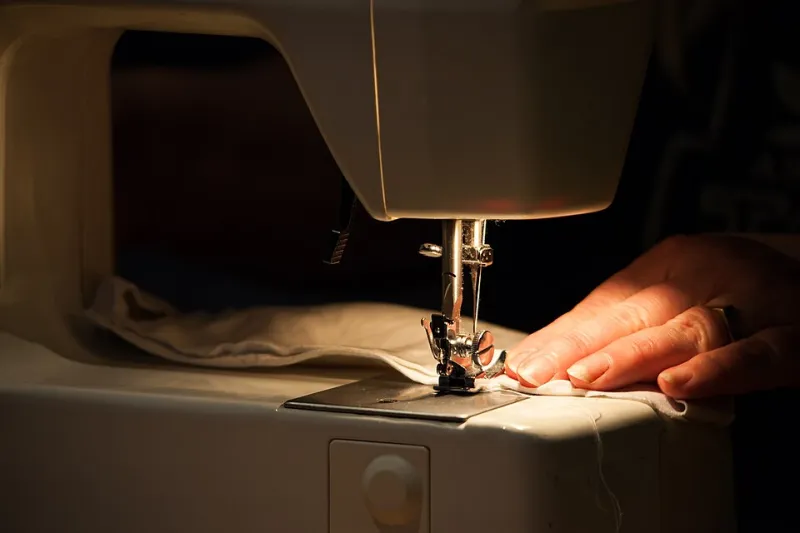
Photo: Tadeáš Bednarz, CC BY-SA 4.0, via Wikimedia Commons
There's a sweater sitting in the back of your closet right now. You know the one. It has a small hole near the cuff, or maybe the seam along the shoulder has started to give. You haven't worn it in months, but you haven't thrown it away either, because something about it still feels important. Maybe it's the color. Maybe it's the memory of where you bought it, or who you were wearing it when something really good happened.
Here's the thing: that sweater isn't broken. It's just waiting.
Visible mending — the practice of repairing clothes in ways that are intentional, even decorative — has been slowly building momentum in fashion circles for years now. And while it might sound like a craft project from a simpler time, it's actually one of the most quietly revolutionary things happening in personal style right now. It's a direct, tender pushback against a culture that tells us to discard and replace, and it's rooted in something that feels very at home here at Peony Kiss: the idea that the things we love deserve to be cared for.
Why We Stopped Mending (And Why We're Starting Again)
For most of human history, mending clothes wasn't optional — it was survival. Fabric was precious. A well-darned sock or a carefully patched dress wasn't a sign of poverty; it was a sign of skill and care. Then, somewhere in the latter half of the twentieth century, clothing got cheap enough that fixing things stopped making economic sense. Why spend an afternoon with a needle and thread when a replacement costs less than a latte?
Fast fashion accelerated this logic to an almost absurd degree. We started buying more, keeping things less, and somewhere in that exchange, we lost the thread — literally and figuratively — of what it means to have a relationship with our clothes.
But something is shifting. Maybe it's the growing awareness of what fast fashion actually costs the planet. Maybe it's a deeper cultural hunger for things that feel real and lasting. Whatever the reason, a new generation of sewers, creatives, and style lovers is picking up embroidery hoops and darning mushrooms and saying: not yet.
The Beauty of the Visible
What makes the current mending movement so distinct — and so visually compelling — is the word "visible." Traditional mending aimed for invisibility. The goal was to make a repair so seamless that no one would ever know it happened. Visible mending flips that entirely.
Instead of hiding the worn spot, you celebrate it. A fraying knee on a pair of jeans becomes a canvas for a small embroidered garden. A moth hole in a cashmere sweater gets filled in with a contrasting color of yarn in a pattern that looks intentional — because it is. Japanese sashiko stitching, with its geometric white patterns on indigo fabric, has become one of the most beloved visible mending techniques in the US right now, and it's easy to see why. The repairs are stunning. They transform damage into design.
This is where mending becomes deeply personal. Every stitch you put into a piece of clothing is a mark of your own hand. It's a signature. When you wear a jacket you've mended yourself, you're wearing something genuinely one of a kind — not because a brand made it that way, but because you did.
What You'll Need to Get Started
The good news is that visible mending has a pretty gentle learning curve, and you don't need a lot of equipment to begin.
For darning (repairing holes in knits and wovens): A darning mushroom or egg is your best friend. It holds the fabric taut while you weave thread back and forth across the hole. You'll also want a blunt-tipped darning needle and yarn or thread in a weight that matches — or beautifully contrasts — your fabric.
For patching: Iron-on patches have come a long way aesthetically, but hand-stitched patches have a warmth that's hard to replicate. Cut your patch slightly larger than the damaged area, pin it in place, and secure it with a running stitch, blanket stitch, or sashiko pattern around the edges.
For embroidery over stains or small tears: A basic embroidery kit — a few hoops, some DMC floss in colors you love, and an embroidery needle — is all you need. Covering a small stain with a sprig of flowers or a tiny bee takes maybe an hour and turns a frustrating flaw into a feature.
There are wonderful tutorials on YouTube and Instagram for all of these techniques, and the community around visible mending online is genuinely warm and encouraging. Search for hashtags like #visiblemending and #mendingmatters and you'll find thousands of people sharing their repaired pieces with real pride.
The Emotional Weight of a Mended Thing
Here's what nobody really talks about when they discuss mending: how it feels to do it.
There's something almost meditative about sitting with a piece of clothing that means something to you and slowly, carefully bringing it back. You're not just repairing fabric. You're making a decision — a deliberate, loving decision — that this thing is worth your time. In a world that moves very fast and values things very little, that act is surprisingly emotional.
The blouse you wore on a first date. The denim jacket you've had since college. The dress your grandmother left you that's starting to show its age. Mending these things isn't just practical. It's a way of honoring the stories they carry. It's a way of saying: I remember. I'm not ready to let this go.
And when you wear a mended piece, something shifts in how you carry yourself. You know the history of what you have on. You know the care that went into keeping it alive. That's a quiet kind of confidence — the kind that doesn't need to announce itself.
A Different Kind of Style Story
At Peony Kiss, we talk a lot about building a wardrobe that actually means something. Mending is one of the most direct paths to that. It forces you to slow down, look closely at what you own, and ask yourself what you actually love versus what you've just accumulated.
The pieces worth mending will reveal themselves quickly. They're the ones where the answer comes without hesitation: yes, this one. This one stays.
That's not a small thing. Knowing what you love — really knowing it — is the foundation of a personal style that feels true. And wearing clothes that you have literally sewn back together with your own hands? That's not just style. That's intimacy.
So dig out that sweater. Find the jeans with the torn pocket. Pull the dress from the back of the closet. They're not finished yet. Neither, really, are you.
Pick up the needle. See what you can make of what you already have.