Swipe On, Stand Tall: Why a Bold Lip Has Always Been a Woman's Quiet Revolution
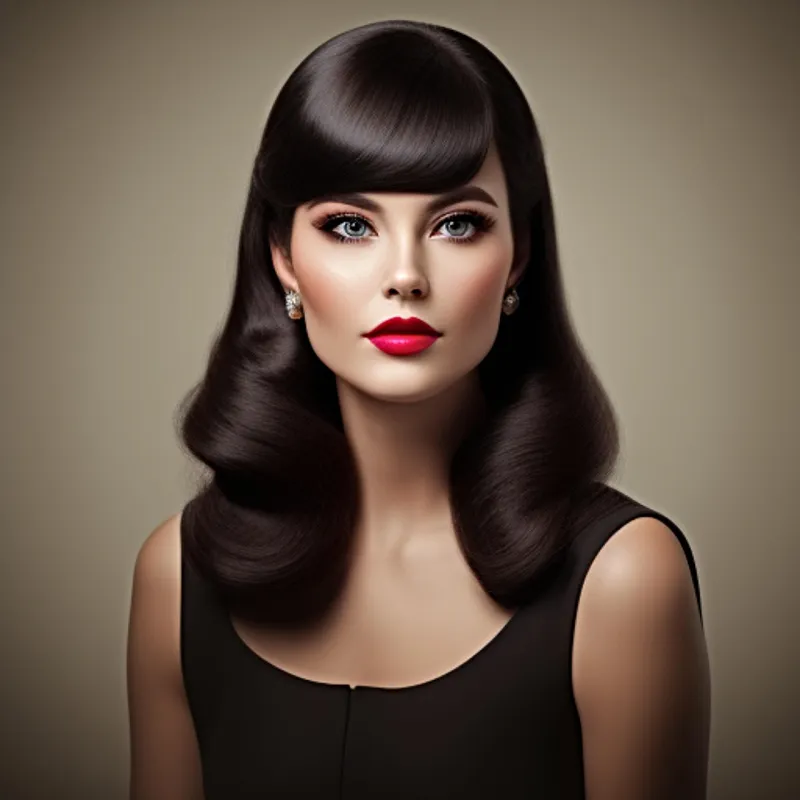
Photo: woman applying bold red lipstick mirror confident close up beauty, via cdn.pixabay.com
Something happens when you uncap a bold lipstick. There's a pause — maybe half a second — where the world outside the mirror doesn't exist. The news, the inbox, the ambient hum of everything feeling slightly off-kilter: all of it falls away. And then you press color to your lips, and something shifts. You stand a little straighter. You feel, inexplicably, more like yourself.
This isn't coincidence. It isn't superficiality dressed up in pretty packaging. What you're experiencing in that moment has a name, a history, and a genuinely fascinating psychological backbone. And once you understand it, you'll never look at your makeup bag the same way again.
The Lipstick Effect: More Than a Catchy Phrase
Economists coined the term "lipstick effect" in the early 2000s to describe a pattern they'd noticed across decades of consumer data: when times get tough — recessions, wars, periods of collective anxiety — sales of small luxury items, particularly lipstick, tend to climb. The theory is straightforward. When big indulgences feel out of reach or irresponsible, people redirect that desire toward something manageable. Something affordable. Something that still delivers a hit of pleasure and control.
But here's where it gets more interesting than any economics textbook will tell you. The lipstick effect isn't just about spending habits. It's about what women are actually doing when they make that purchase, when they open that compact, when they choose the red over the nude on a Tuesday that feels like it's trying to swallow them whole.
They're reclaiming something.
A History Written in Color
Lipstick has never been politically neutral. During World War II, the U.S. War Production Board restricted most cosmetics to conserve materials — but lipstick was exempt. Military leaders, including Winston Churchill across the pond, reportedly believed it was essential for morale. Women working factory lines, sending sons and husbands overseas, navigating a world cracked open by grief and uncertainty — they kept wearing it. Red, mostly. Vivid and unapologetic.
That wasn't vanity. That was defiance wearing a pretty face.
Flash back further, and you'll find that throughout history, powerful women have used cosmetics as a form of coded communication. Queen Elizabeth I's white face and crimson lips weren't just fashion — they were armor. A signal. A performance of sovereignty that said I am not diminished. I am not afraid.
The language has changed over centuries, but the message hasn't. When a woman chooses to adorn herself deliberately, especially during moments when the world is telling her to shrink, she is making a statement that requires no words.
What the Psychology Actually Says
Researchers at Harvard and other institutions have studied what they call "enclothed cognition" — the idea that what we wear (and by extension, how we present ourselves) genuinely affects our cognitive and emotional state. The physical act of putting on something that makes you feel powerful creates a feedback loop: you feel more confident, so you carry yourself differently, so the world responds to you differently, which reinforces the confidence. It's not magic. It's neuroscience.
Apply that to a bold lip, and suddenly that two-minute mirror moment makes complete sense. You're not just changing your appearance. You're sending a signal to your own nervous system. We are okay. We are here. We are not disappearing.
There's also something worth noting about the specific act of choosing. In periods of uncertainty, the feeling of having no control over external circumstances can be quietly devastating. Choosing a lipstick — picking a specific shade, deciding on a look, executing it — is an act of agency in miniature. It's small, yes. But small isn't the same as insignificant.
The Modern Woman's Relationship With the Statement Moment
We live in a culture that increasingly conflates effort with desperation and confidence with arrogance, particularly when it comes to how women dress and present themselves. There's a whole genre of internet commentary dedicated to policing whether a woman's choices are "too much" for the occasion, the era, the vibe. Bold lipstick, in this context, can feel almost radical.
And maybe that's exactly the point.
When you swipe on something vivid — a true red, a deep berry, a warm terracotta that makes your whole face glow — you are opting out of the expectation that you should be muted. You're refusing to blend into the background of your own life. That refusal is not trivial. In a world that benefits from women making themselves smaller, showing up with a deliberate, visible beauty choice is its own kind of power move.
The readers who gravitate toward Peony Kiss already understand something that takes others years to learn: style is a language, and every choice you make is a sentence in an ongoing story about who you are and how you intend to move through the world.
How to Make Your Beauty Choices Feel Intentional
You don't have to reach for a fire-engine red to participate in this particular revolution. The principle isn't about a specific color or product — it's about choosing with intention rather than defaulting to whatever feels safest or most invisible.
Here are a few ways to bring that intentionality into your everyday routine:
Start with how you want to feel, not how you want to look. Ask yourself what emotion you're trying to carry into the day. Confident? Soft but present? Like someone not to be underestimated? Let that answer guide your shade selection rather than working backward from what you think is "appropriate."
Treat the application as ritual, not routine. There's a difference between swiping on lipstick in thirty seconds while checking your phone and actually pausing, looking at yourself, and applying it with care. The second version is the one that delivers the psychological payoff.
Resist the urge to apologize for it. If someone comments on your bold lip in a way that implies it's "a lot," you're allowed to simply say thank you and move on. You owe no one an explanation for choosing to show up fully.
Let it evolve with your mood. Your go-to shade on a hard week doesn't have to be the same as your go-to on a celebratory Saturday. Part of the beauty of having a range is that you can dress your face the way you dress your body — in response to how you actually feel, not how you think you should feel.
The Smallest Revolution Is Still a Revolution
There's a version of this conversation that dismisses lipstick as a frivolous topic, unworthy of this kind of analysis. That version is wrong, and also a little boring.
The truth is that beauty choices, like clothing choices, have always carried meaning — social, political, personal. The women who wore red lips through rationing and recessions and upheaval weren't being shallow. They were being resilient. They were saying, with every application, that they had not been erased.
You're in that lineage. Every time you choose color over camouflage, presence over disappearance, intention over habit — you're participating in something that stretches back further than you might think.
So the next time you're standing at your mirror on a morning that feels heavier than it should, and you reach for something bold almost without thinking about it — trust that instinct. It knows something your anxious brain might have temporarily forgotten.
You are still here. And you might as well look the part.