The Stain That Stayed: Why the Marks on Your Clothes Are the Most Honest Part of Your Wardrobe
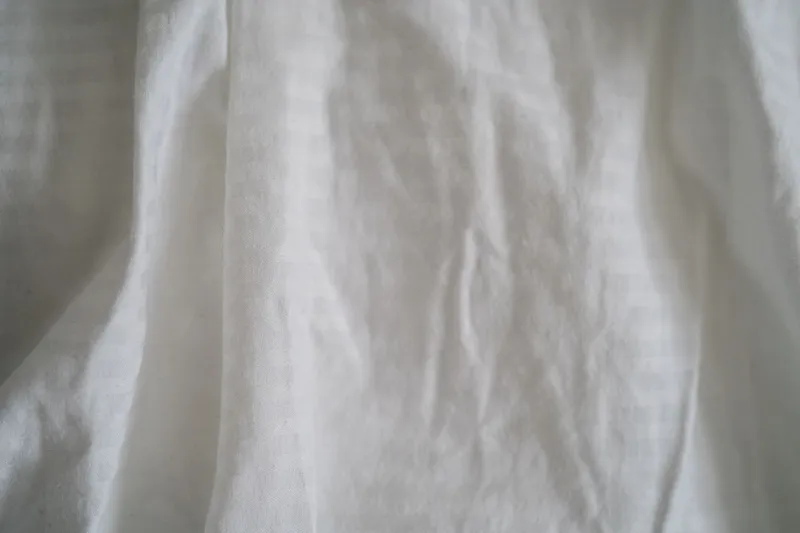
There's a cream-colored linen shirt in my closet with a small rust-colored mark near the second button. I know exactly where it came from — a farmers market in August, a paper cup of cold brew, a moment of laughing too hard at something a friend said. I've tried to get it out. I've tried twice, actually. And at some point, without really deciding to, I stopped trying.
That shirt is still one of my most-reached-for pieces.
We talk a lot in fashion about the ideal — the perfect fit, the pristine finish, the unwrinkled, unspoiled garment that looks exactly as it did on the hanger. But there's a whole other conversation worth having about the clothes that bear the evidence of a real life. The scuffed heel. The faded pocket edge. The hem that's been walked on one too many times. These aren't failures. They might actually be the most intimate things in your wardrobe.
What Wabi-Sabi Has to Do With Your Closet
The Japanese concept of wabi-sabi — a philosophy that finds beauty in impermanence, imperfection, and incompleteness — doesn't get nearly enough credit in Western fashion culture. We're so conditioned to treat wear and age as problems to solve that we rarely stop to ask whether the worn-in quality of something might actually be its most compelling feature.
Wabi-sabi shows up in a crackled ceramic mug you refuse to throw away, in the patina on a leather bag that's traveled with you for a decade, in the slight pilling on a cashmere sweater that's been washed so many times it's practically a part of you. It's the aesthetic of things that have been used, genuinely and without apology.
When you apply that lens to your wardrobe, something shifts. The goal stops being preservation and starts being presence. You stop dressing to protect your clothes and start dressing to actually live in them.
The Emotional Weight of a Mark
Clothing researchers — yes, that's a real field — have long noted that we form deep psychological attachments to garments that carry personal history. It's not just nostalgia. It's something more embodied than that. A piece of clothing that's been with you through something real holds a kind of emotional residue that a brand-new item simply can't replicate.
Think about the dress you wore to your best friend's wedding that has a tiny champagne splash near the hem. Or the denim jacket with the frayed cuff from the night you stayed out until 2 a.m. dancing at a show you almost didn't go to. Or the sweater with the pulled thread from where your kid grabbed onto you when they were small and scared.
These marks are timestamps. They're proof that something happened, that you were there, that you were in it. No amount of careful dry cleaning can give you that.
Why We're So Quick to Throw Things Away
Fast fashion has done something quietly devastating to our relationship with clothes: it's trained us to treat imperfection as a reason to discard rather than a reason to cherish. When a garment costs $18 and falls apart after six washes, of course you toss it. There's no emotional investment, no history, no reason to grieve.
But that cycle has also eroded our tolerance for the natural aging of even the things we genuinely love. We see a small stain and immediately think ruined instead of marked. We notice a faded seam and assume the piece is past its prime rather than considering that it's simply grown into itself.
Reclaiming a different relationship with imperfection means slowing down enough to ask: does this mark change how I feel wearing this? Does it make it less me, or more?
The Pieces That Earn Their Imperfections
Not every stained or worn item deserves a place in your closet, obviously. There's a real difference between a piece that's been genuinely loved and one that's simply fallen apart. The distinction usually lives in the feeling — you know immediately which category something falls into.
The pieces that earn their imperfections tend to share a few qualities. They fit you in a way that still feels right. They're made of something with enough substance to age gracefully — real denim, sturdy linen, leather that develops character, wool that softens over time. And they carry a memory or a feeling that makes you reach for them even when something newer and shinier is available.
Those are the pieces worth keeping. Worth wearing. Worth letting live on your body instead of preserved in plastic in the back of your closet.
Learning to Wear Things Like You Mean It
There's a kind of freedom that comes with deciding to actually wear your things — to stop saving the nice blouse for a special occasion that never quite arrives, to stop worrying about the white skirt, to stop treating your wardrobe like a museum of things too precious to touch.
Wearing something fully, letting it absorb your life, means accepting that it will change. The colors will soften. The fabric will mold to your particular shape. The hem will know your stride. And somewhere along the way, the piece stops being just a piece of clothing and becomes something closer to a companion.
That's not a small thing. In a culture that's constantly pushing us toward the next purchase, the new thing, the upgrade — there's something quietly radical about loving what you already have, marks and all.
A Different Kind of Beauty Standard
Peony Kiss has always believed that style is personal, and nothing is more personal than a garment that's been shaped by your actual life. The beauty we talk about here isn't about perfection — it's about presence. It's about wearing things that feel like you, even when (especially when) they've been through something.
So maybe the most romantic thing in your wardrobe isn't the pristine piece with the tags still on. Maybe it's the one with the stain you've stopped trying to remove. The one that remembers where you were. The one that's been with you long enough to know the difference between the person you were when you bought it and the person you are now.
Keep that one. Wear it often. Let it keep accumulating the evidence of a life well and genuinely lived.